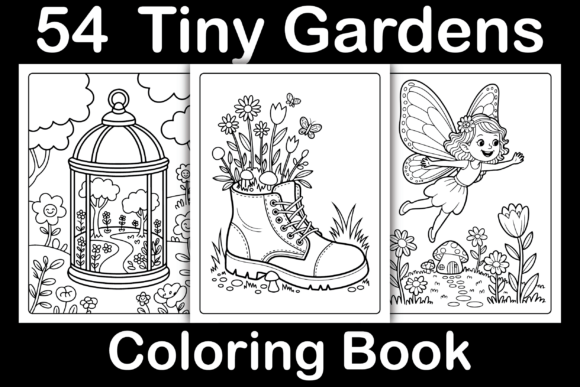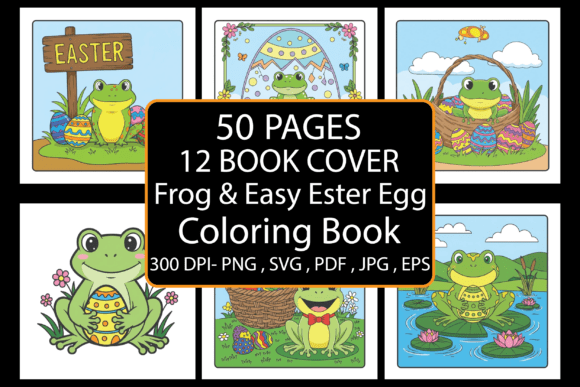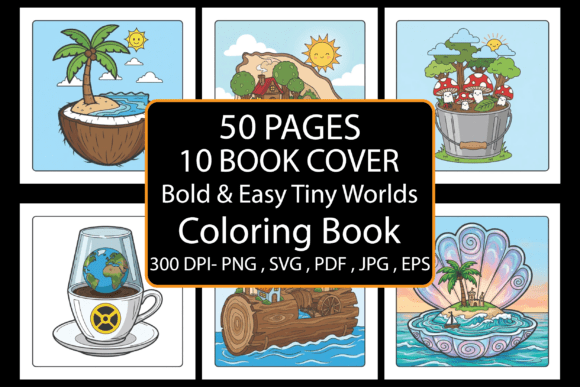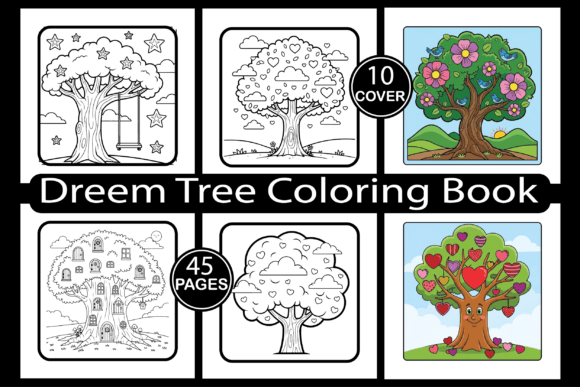
Tiny Magical Shops Coloring Book
First Impression: Whimsy That Stitches Well
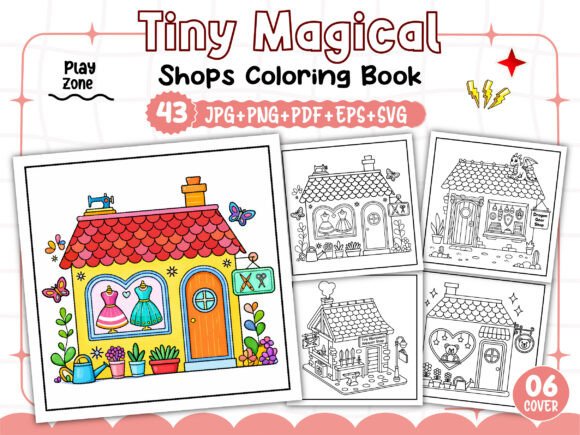
Opening Adult – Tiny Magical Shops Coloring Book, I immediately felt that quiet, warm hum of possibility—the kind you get when a design invites storytelling, not just filling. It’s not overly busy, but it’s rich in character: tiny apothecary jars, crooked shop signs, curling vines, and delicate windows with implied light. As an embroidery designer who’s stitched everything from nursery pillows to boutique aprons, I looked past the coloring-page surface and asked: *What happens when this becomes thread on fabric?*
A Real-World Test: Embroidering a Linen Tote for a Local Gift Shop
Last week, I prepped a custom linen tote for a small-town gift shop—its branding leans into gentle magic and handmade charm. I pulled Tiny Magical Shops Coloring Book into my digitizing software (as a reference image, since it’s a PNG-based coloring page), traced key motifs, and built a simplified 3.5" wide embroidery layout centered on the front panel. Why this design worked so well: its clean line weight holds up at medium scale, its organic spacing avoids tight clusters that cause stitch crowding, and its asymmetry feels intentional—not accidental.
Where It Shines in Embroidery Projects
- Custom apparel: Works beautifully on sweatshirts and oversized tees—especially when digitized with balanced satin and fill stitches around shop outlines and subtle running-stitch vines.
- Tote bag design & pillow covers: The moderate detail level reads clearly at 4–5", without needing excessive underlay or density adjustments.
- Baby embroidery & nursery decor: Soft shapes and rounded edges translate well to gentle applique designs—ideal for onesies or muslin wall hangings where sharp lines would feel out of place.
- Holiday embroidery & personalized gifts: Pair a single “tiny bookshop” motif with a name or year for a thoughtful, non-cliché Christmas or birthday gift—no snowflakes or glitter required.
- Etsy seller & craft fair products: Its cohesive theme makes it easy to build a mini collection—think matching tea towel + patch + embroidered card—and customers recognize the visual thread across items.
Where to Proceed Thoughtfully
This isn’t a one-size-fits-all embroidery file—it’s a coloring page asset, and that matters. Before stitching, consider these real-world constraints:
- Hoop size & scale: Don’t force it into a 3" hoop unless you simplify significantly. Small shop signs or lettering may vanish on dense fabrics—or worse, become unstable with too few stitches.
- Fabric texture & stability: On textured linen or loosely woven canvas, fine interior lines (like shelf details or windowpanes) can blur. Use medium-weight cutaway stabilizer and test stitch density—too much fill stitch = stiff, bulky results.
- Dark or stretchy fabric: Since Tiny Magical Shops Coloring Book relies on clear outlines and gentle contrast, avoid ultra-thin or highly stretchy knits unless you’re adding backing and reducing stitch speed.
- Curved surfaces: Caps or curved pillow edges distort delicate horizontal elements (like shop awnings or floorboards). Digitize with slight vertical compression or choose only the most central, symmetrical motif.
- Wash durability: If making baby items or kitchen towels, confirm your digitized version avoids ultra-thin satin borders or floating threads—those won’t survive repeated laundering.
Design Integrity Meets Customer Trust
What makes Tiny Magical Shops Coloring Book stand out isn’t just prettiness—it’s *readability*. Customers browsing your Etsy shop or boutique notice clarity before color. A well-executed version says “handmade with care,” not “mass-produced clip art.” When used thoughtfully—as part of a curated set of design assets—it strengthens brand consistency. Think: same shop motif appearing as a stitched patch, a printed tag, and a digital mockup on your product listing. That repetition builds recognition without feeling repetitive.
Practical Notes Every Embroidery Designer Should Keep Handy
- Always test first: Stitch a sample on scrap fabric matching your final project’s weight and weave—even if it’s just one shop facade.
- Check thread color contrast: Try black thread on cream linen, then ecru thread on navy cotton. Does the shape hold? Does the story still land?
- Review stitch density: High-density fills in tiny jars or signs can pucker thin fabric. Adjust underlay or reduce density by 10–15% if needed.
- Inspect small details: Zoom in on your digitized version—do windowpanes read as lines or blobs? Do door handles stay distinct after stitching?
- Mock it both ways: View your layout in black-and-white and grayscale. If it loses personality without color, reconsider detail level or spacing.
- Stabilizer is non-negotiable: Especially for lightweight cotton or textured weaves—skip the tear-away; go for cutaway or wash-away depending on your end use.
- Licensing check: Since Tiny Magical Shops Coloring Book is listed as a Graphics asset with free PNGs, verify whether commercial use (e.g., selling finished embroidered totes) is permitted before launching your craft business product.
Final Thought: Not Just a Coloring Page—A Design Starting Point
Tiny Magical Shops Coloring Book doesn’t shout. It murmurs—inviting you to slow down, select carefully, and stitch with intention. It’s ideal for makers who value mood over mass, subtlety over saturation, and craftsmanship over convenience. Used well, it becomes more than decoration: it’s a quiet signature on a handmade product, a recognizable whisper of magic on a holiday gift, or the thoughtful detail that turns a small shop product into something memorable. Just remember—it’s a starting point, not a finish line. Your skill, judgment, and attention to fabric, thread, and context are what bring the tiny shops fully to life.