Floral Boots Coloring Pages
A Designer’s First Glance: Whimsy with Wearable Potential
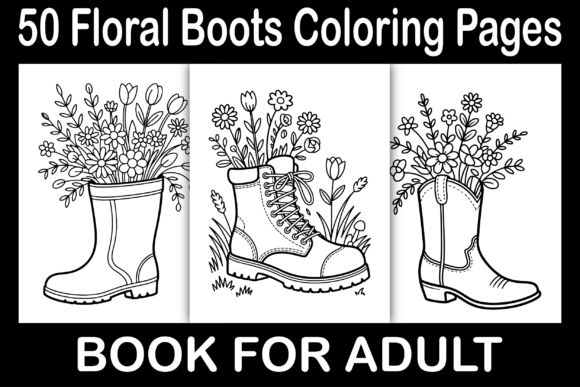
When I opened Floral Boots Coloring Pages, my first thought wasn’t “cute” — it was “stitchable.” That’s the litmus test for any design I consider for real embroidery work. The boots are drawn with confident, clean outlines and a gentle, organic asymmetry — think wildflower stems curling up the shaft, not rigid symmetry. There’s breathing room between elements, no overcrowded corners or micro-details that would vanish under satin stitch. It feels like a hand-drawn sketch translated into something that *wants* to be stitched — not just printed.
Where This Design Truly Shines (and Why)
I recently used a variation of this motif on a custom embroidered tote bag for a local botanical boutique. We placed a single boot — scaled to 4.2” wide — near the bottom corner of a natural linen canvas tote. The result? Instant charm without clutter. Customers paused, smiled, and asked where the design came from. That’s the quiet power of Floral Boots Coloring Pages: it reads as handmade, intentional, and quietly joyful — not mass-produced or generic.
It works especially well for:
- Small-batch apparel: Think crewneck sweatshirts for spring markets — one boot centered on the chest or subtly angled across the back yoke. The floral accents translate beautifully into fill stitch with subtle color gradation.
- Baby and nursery items: A soft pink or sage version on a cotton knit onesie holds up beautifully in running stitch + light fill — no dense stitching needed, which is kinder to delicate fabrics and tiny shoulders.
- Patches and aprons: Because the outline is strong and self-contained, it converts cleanly into an embroidered patch. On a denim or canvas apron, it adds personality without competing with pockets or straps.
- Holiday and gift-ready pieces: Pair it with a simple “Spring Has Sprung” or “Walk in Bloom” phrase in a clean sans-serif — and you’ve got a cohesive, printable mockup for Etsy listings or craft fair displays.
Real Embroidery Considerations — What You’ll Actually Face
Let’s be practical: not every coloring page translates seamlessly to thread. With Floral Boots Coloring Pages, the biggest strength is also its quiet limitation — it’s *designed for coloring*, not digitizing. That means:
- Stitch density isn’t built in — you’ll need to digitize or choose a trusted embroidery file version. Don’t assume the line weight will automatically become a balanced satin border; thin stems may need reinforcement, and open floral centers may call for light fill or strategic running-stitch texture.
- Curved surfaces demand testing — I tried a small-scale version on a curved cap front and found the boot’s toe area stretched slightly. For caps or baby bonnets, scale down to ≤3” and use a medium cutaway stabilizer to hold shape.
- Dark or textured fabrics change everything — on charcoal terry cloth tea towels, the fine vine details softened unless I increased contrast in thread selection (e.g., mustard yellow stem + deep plum flower). Always test your thread colors on scrap fabric first — what looks vibrant on screen rarely lands the same way in stitch.
- Washability matters — if you’re making personalized gifts or boutique baby items, avoid overly dense fill in the boot’s upper panel. A lighter stitch density here prevents stiffness and improves durability through repeated laundering.
What This Design Says About Your Brand — Before a Single Stitch
Your choice of design shapes perception — fast. Floral Boots Coloring Pages signals approachability, gentle creativity, and attention to detail without pretension. It doesn’t scream “luxury” — but it does whisper “thoughtfully made.” That builds trust with customers who value authenticity over flash. For Etsy sellers and small shop owners, that alignment is gold: it fits naturally into branding for cottage-core aesthetics, mindful parenting shops, garden-themed boutiques, or teacher appreciation lines.
Used well, it elevates a simple kitchen towel into a personalized gift. Stretched across a pillow cover, it becomes nursery decor with narrative. Even as a digital embroidery file preview in your shop, it invites buyers to imagine their own version — which boosts engagement and reduces returns.
Designer Notes You Can’t Skip
Before cutting fabric or listing a finished product:
- Test on scrap fabric — especially if using stretchy knits, lightweight chambray, or dark denim. Observe how the floral curves hold up at your chosen scale.
- Check licensing — since this is marketed as a coloring book interior for KDP, confirm whether the license permits commercial embroidery use or resale of physical finished products. When in doubt, reach out to the creator.
- Review stitch density in your digitized version — avoid heavy fills in narrow boot shafts; they’ll pucker. Use underlay strategically, especially on low-loft fabrics.
- Confirm hoop size compatibility — the original 8.5” x ? dimensions suggest flexibility, but most apparel applications will land between 3–5”. Resize before digitizing, not after.
- Try black-and-white mockups — this design relies on shape and flow more than intricate linework, so it holds up well in monochrome — useful for minimalist branding or embroidery-only presentations.
- Compare light vs. dark backgrounds — the boot’s silhouette works both ways, but floral details pop more on light fabric unless you boost thread contrast intentionally.
Final Thought: Not Just a Coloring Page — A Starting Point
Floral Boots Coloring Pages isn’t a plug-and-play embroidery file. It’s raw, adaptable, and full of quiet intention. As a designer and reviewer, I appreciate that it asks for thoughtful translation — not just automation. Used with care, it becomes part of something warmer: a custom-embroidered baby blanket passed down, a boutique sweatshirt that starts conversations, or a holiday gift that feels like a handwritten note in thread form. That’s the kind of design worth investing time in — and the kind that keeps customers coming back for more.