Bold and Easy Flower Coloring Pages
First Impressions: Simplicity That Speaks Volumes
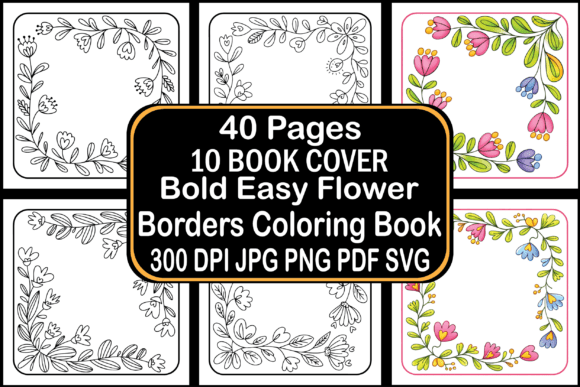
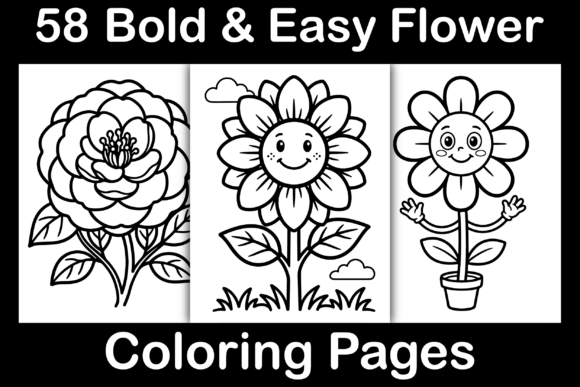
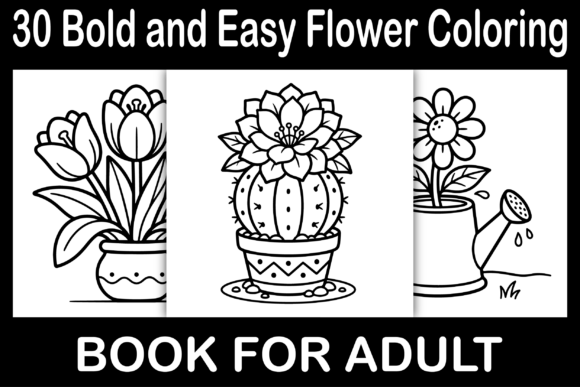
When I opened Bold and Easy Flower Coloring Pages, my eye didn’t scan for complexity—it relaxed. The outlines are clean, confident, and generously spaced. No fussy linework, no overlapping petals that beg for tiny tweezers and a magnifier. Just bold, friendly florals—roses, daisies, tulips—with open centers and clear negative space. It feels like a breath of air after reviewing dozens of over-detailed coloring pages marketed as “embroidery-ready” but practically impossible to stitch cleanly at 3–4 inches wide.
A Real Project in Mind: Embroidering a Linen Tea Towel for a Local Boutique
Last week, I prepped a small batch of linen tea towels for a neighborhood kitchen boutique. Their brand voice is warm, unhurried, and quietly thoughtful—no loud graphics, no trendy clutter. I pulled up Bold and Easy Flower Coloring Pages and traced one of the medium-sized daisy designs onto tear-away stabilizer. Within 20 minutes, I’d digitized a simplified version optimized for satin-stitched outlines and light fill-stitch centers (no dense fills). The result? A soft, hand-drawn charm that held up beautifully on textured linen—even with mid-weight cutaway stabilizer underneath. Customers noticed it immediately: “It looks handmade, not machine-made,” one said. That’s the quiet power of this collection.
Where It Shines—And Where It Asks for Thoughtful Handling
Bold and Easy Flower Coloring Pages works especially well for:
- Custom apparel—especially sweatshirts and tote bags where bold shape reads from across a room;
- Baby embroidery and nursery decor, thanks to its gentle scale and lack of fine interior detail;
- Embroidered patches and aprons, where clarity trumps intricacy;
- Holiday embroidery and personalized gifts—think monogrammed pillow covers with a single flower tucked beside the name;
- Digital product previews for Etsy sellers building printable mockups or KDP interior assets.
But—and this matters—its strength is also its boundary. Because these are coloring pages, not pre-digitized embroidery files, they’re outlines only. You’ll need to digitize or trace them yourself. That means: no automatic satin-stitch borders, no built-in underlay, no optimized stitch direction. If you’re planning machine embroidery design work for stretchy fabric, curved surfaces like caps, or thin baby onesies, treat each shape like raw material—not a finished embroidery file. Test every curve, every petal tip, every junction point on scrap fabric first.
Practical Designer Notes You’ll Actually Use
Here’s what I do before committing Bold and Easy Flower Coloring Pages to a real project:
- Check thread color contrast—bold lines lose impact on dark fabric unless you use bright white, ecru, or high-contrast pastels;
- Review stitch density in your digitizing software—those open centers invite light fill stitches, but avoid heavy densities that could stiffen delicate fabrics;
- Confirm hoop size compatibility—the largest flowers fit comfortably in a 5×7 hoop, but smaller versions (like the bud clusters) work well in 4×4 for baby caps or patch backs;
- Inspect small details—some stems taper to near-nothing; widen them slightly for stability in running stitch or stem stitch;
- Test in black and white mockups—this reveals how well shape alone carries the design without color cues;
- Compare light vs. dark fabric backgrounds—what reads as “bold” on white paper may vanish on charcoal denim without careful thread selection;
- Use proper stabilizer—linen and tea towels need cutaway; knits demand tear-away + topping; lightweight cottons benefit from lightweight fusible;
- Verify licensing—since this is labeled as a Graphics product for KDP interiors, confirm whether commercial use of stitched items (e.g., selling embroidered totes on Etsy) is permitted under its terms.
How It Shapes Perception—Of Your Product, Your Brand, Your Craft
Using Bold and Easy Flower Coloring Pages doesn’t just add a flower to a tote bag—it signals intention. Customers sense when a design was chosen for clarity, not just cuteness. That translates directly to handmade product credibility: no visual noise, no stitching fatigue, no “what *is* that supposed to be?” confusion. For an Etsy seller or small shop product, that builds trust faster than any description. It also supports brand consistency—you can easily adapt one flower across multiple items (a sweatshirt, a tea towel, a set of napkins) while keeping tone unified.
And let’s talk giftability: parents love these for baby embroidery because the shapes feel tender, not cutesy. Wedding clients appreciate them for minimalist bridal shower gifts—think a single outlined peony on ivory linen. Even holiday embroidery gains quiet warmth when the motif isn’t competing with glitter or script.
Final Thought: A Design Asset That Respects Your Time and Vision
Bold and Easy Flower Coloring Pages won’t dazzle with photorealism or technical fireworks. But it delivers something rarer in today’s oversaturated digital marketplace: breathing room. Space for your stitching voice. Room for your customer’s imagination. And reliability—when you need a floral motif that won’t fight your needle, your fabric, or your timeline. Whether you’re building design assets for a craft business, prepping for a local craft fair, or stitching a personalized gift for a friend, this collection earns its place in your working library—not as filler, but as foundation.