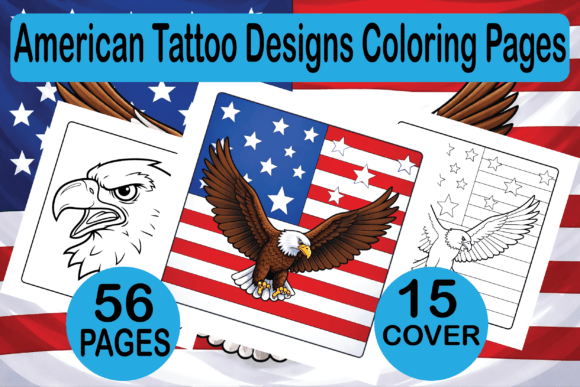
American Tattoo Designs Coloring Pages
First Impressions: Bold, Graphic, and Ready for Stitching
Opening American Tattoo Designs Coloring Pages, I immediately felt the weight of intention behind it—not as a whimsical doodle pack, but as a cohesive set of strong, graphic motifs rooted in classic American tattoo iconography: eagles, anchors, roses, swallows, banners with “USA” or “Liberty,” vintage-style stars, and bold script phrases. These aren’t delicate line drawings meant for coloring books alone—they’re high-contrast, confident outlines with intentional negative space and rhythmic line weights that translate beautifully into embroidery. As an embroidery designer who’s stitched everything from baby onesies to boutique aprons, I recognized these shapes right away: they hold up under satin stitch, read clearly at 3–4 inches wide, and carry visual authority even on textured fabrics like canvas or terry cloth.
Real Project Test: A Custom Embroidered Tote for a Local Veteran-Owned Café
Last month, I used three designs from American Tattoo Designs Coloring Pages to create embroidered canvas totes for a small veteran-owned café launching a “Patriot Brew” summer campaign. I chose the eagle-and-shield motif, a simplified anchor with rope detail, and a clean “Home Is Where the Heart Is” banner. Printed the coloring pages at 80% scale, traced them onto stabilizer-backed canvas, and stitched using medium-density fill and crisp satin borders. The result? Sharp, legible, and undeniably handmade—no pixelation, no lost detail, no awkward gaps between elements. Customers responded strongly—not just to the theme, but to how *resolved* the embroidery looked. That’s the quiet strength of this collection: it’s designed for translation, not just decoration.
Where It Shines (and Where It Needs Care)
American Tattoo Designs Coloring Pages excels in applications where clarity, symbolism, and bold presence matter:
- Custom apparel: Works exceptionally well on sweatshirts, denim jackets, and structured tote bags—fabrics that support moderate stitch density and hold clean lines.
- Embroidered patches: Many motifs are self-contained and balanced enough to stand alone on twill or chenille backing.
- Boutique branding & small shop products: Perfect for tea towels, pillow covers, or aprons sold in craft fairs or Etsy shops—customers instantly recognize the heritage aesthetic without needing explanation.
- Holiday and personalized gifts: The “Stars & Stripes” banner or “Freedom” script reads warmly on baby blankets or 4th of July kitchen towels—especially when stitched in navy, red, and cream thread.
But—and this is critical—American Tattoo Designs Coloring Pages isn’t plug-and-play for every surface. Use caution with:
- Stretchy fabrics (like jersey or ribbed knits) unless heavily stabilized—the bold outlines can distort if tension shifts.
- Very small hoop sizes (under 3.5 inches): some lettering and fine rope details may compress or lose definition.
- Dark or heavily textured fabrics: test contrast first. What reads boldly on white paper doesn’t always pop in black thread on charcoal terry cloth.
- Curved surfaces like caps or hats: avoid motifs with long horizontal banners or tight corner intersections—they’ll warp or bunch without careful digitizing.
Design Integrity Meets Commercial Practicality
What makes American Tattoo Designs Coloring Pages valuable for creative entrepreneurs isn’t just its theme—it’s how thoughtfully the graphics balance simplicity and character. There’s enough detail to feel authentic (notice the subtle feather layering on the eagle, or the crosshatch shading in the rose), but not so much that it overwhelms a finished product. That balance directly impacts customer trust: a cleanly stitched anchor on a linen apron feels intentional and professional—not like a rushed KDP import. For Etsy sellers and handmade shop owners, that perception lifts perceived value and supports premium pricing.
It also supports brand consistency. If your shop leans into Americana, heritage crafts, or patriotic gifting, these designs reinforce that voice across product types—whether you’re stitching a patch for a backpack or creating a printable mockup for a POD sweatshirt listing. And because they’re delivered as clean, scalable graphics, you control how much (or how little) detail you bring into your final embroidery file—no hidden vector traps or low-res JPEGs.
Practical Embroidery Designer Notes Before You Stitch
Before committing thread, stabilizer, or client time:
- Always test on scrap fabric first—especially if using textured, dark, or stretchy materials.
- Check thread color contrast in natural light. Some motifs rely on outline weight; pale thread on light fabric can disappear.
- Review stitch density if converting to machine embroidery—you’ll want to avoid overfilling dense areas like rose centers or banner scrolls.
- Confirm hoop size compatibility. Not all motifs scale gracefully down to 2.5”.
- Inspect small details: tiny stars, script serifs, or rope twists may need manual cleanup in your embroidery software.
- Test black-and-white mockups—many buyers browse thumbnails first. Does the design read instantly?
- Compare light vs. dark backgrounds. Some motifs (like the bald eagle facing left) have stronger directional energy on one side—consider placement carefully.
- Use appropriate stabilizer: cutaway for knits, tear-away for stable wovens, and fusible + tear-away for lightweight linens.
- Verify licensing before selling finished embroidered items or digital embroidery files derived from these coloring pages—this pack is intended for KDP, POD, and commercial design use, but always confirm scope with the original seller.
Final Thought: A Confident, Craft-Forward Asset
American Tattoo Designs Coloring Pages isn’t background filler—it’s a toolkit for makers who want their embroidery to mean something *and* land with precision. Whether you’re building a holiday collection, refreshing your Etsy shop’s bestsellers, or stitching a meaningful gift for a service member, these designs carry weight without sacrificing craft integrity. They respect the hand behind the hoop—and the eye behind the purchase.