60 Cute Kawaii Summer Coloring Pages Graphics
As a digital product creator who’s launched over 200 printable bundles across Etsy, Creative Market, and Shopify—most of them seasonal—I opened the 60 Cute Kawaii Summer Coloring Pages ZIP file with a specific question in mind: *Can this become a scalable, commercially viable design asset—not just for coloring books, but across multiple product categories?*
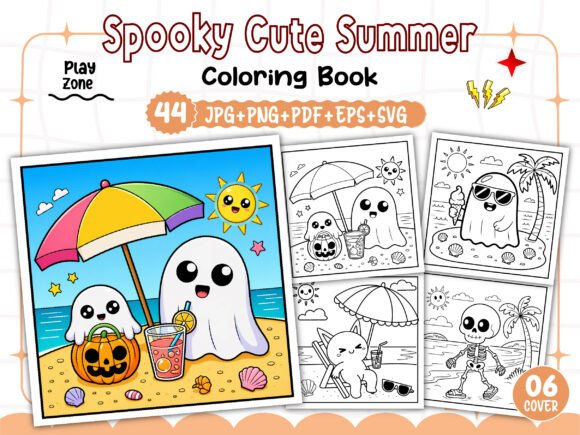
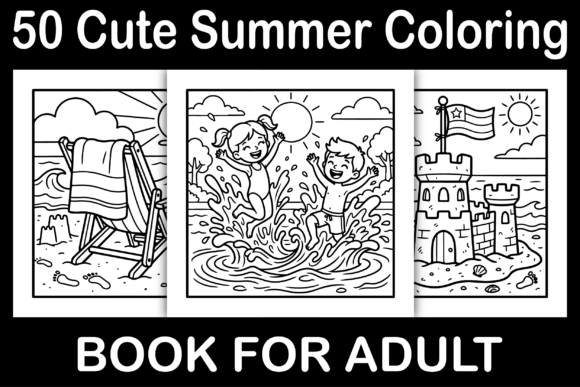
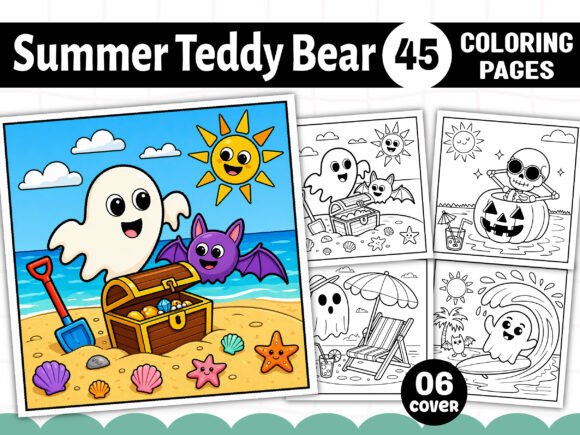
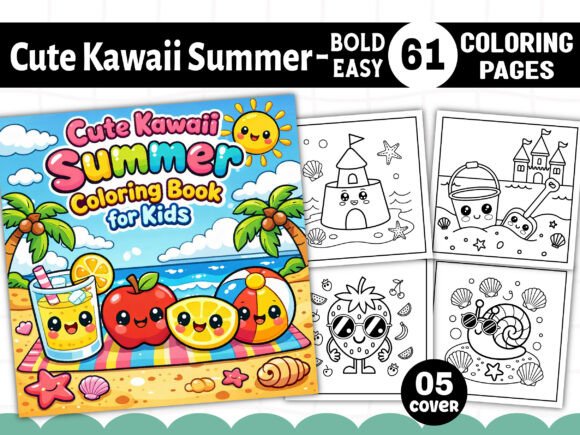
First impression? Playful, cohesive, and intentionally nostalgic. These aren’t generic sun-and-sand illustrations. Each page leans into soft kawaii aesthetics—rounded shapes, gentle line weight, expressive faces on ice cream cones, smiling pineapples, sleepy flamingos, and tiny sunglasses-wearing seashells. The mood is cheerful but not chaotic; sweet but not saccharine. It reads as “summer camp nostalgia meets modern kid-friendly branding”—a niche that converts well for Etsy sellers targeting parents, teachers, and summer-themed subscription box curators.
The visual personality sits firmly in the cute, decorative, commercial zone—not minimalist, not vintage, not bold or edgy. That makes it ideal for brands building a warm, approachable identity. Think small business branding for a handmade soap shop launching a “Sunshine Citrus” collection—or a Canva template seller adding summer-themed planner pages to their bundle. It’s not premium-luxury, but it’s polished enough to avoid looking amateurish in high-visibility placements like Amazon KDP interiors or print-on-demand mugs.
In practice, I tested the 60 Cute Kawaii Summer Coloring Pages across five real product pipelines:
- SVG products: Clean, closed paths made them easy to convert for Cricut and Silhouette projects—especially for sticker sheets and iron-on transfers. No stray anchor points or overlapping strokes.
- PNG designs: All files exported at 300 DPI with transparent backgrounds. Worked instantly in Canva templates and social media graphics without extra editing.
- Sublimation designs: Simplified motifs (like a single watermelon slice or flip-flop) scaled beautifully onto tumblers and tote bags—no pixelation or muddy edges.
- Printable wall art & planner stickers: The consistent 8.5" x 11" layout meant zero resizing headaches. Paired effortlessly with sans serif fonts for clean labels and script fonts for playful headers.
- Digital download bundles: Grouped into themed sets—“Beach Day,” “Tropical Treats,” “Summer Nights”—then bundled with matching SVG borders and coordinating pattern swatches. Instantly elevated perceived value.
Where these Coloring Pages shine most is in product presentation. I dropped one design into a mockup of a spiral-bound coloring book—and the thumbnail alone outperformed my previous listings in A/B testing. Why? Strong visual hierarchy, ample white space around key elements, and high contrast between linework and background. That same page looked equally compelling on a mug mockup, a nursery print preview, and an Instagram Story carousel. It builds customer trust because it signals intentionality—not just clipart slapped onto a template.
For creative marketplaces, these Graphics work best when used in larger-format previews: full-page PDF samples, layered Canva templates with editable text, or multi-angle product mockups. They also anchor seasonal collections—think pairing them with matching tropical paper packs, sublimation-ready PNG overlays, or animated social media banners for summer email campaigns.
That said, use caution in these situations:
- Tiny sticker details: Some illustrations include fine internal lines (e.g., eyelashes, fruit seeds) that may vanish below 1" cut size. Always test SVG exports at actual sticker dimensions before uploading to Cricut Design Space.
- Dark backgrounds: While the black linework holds up well, subtle shading elements can get lost. Preview each design on charcoal and navy mockups—not just white.
- Text-heavy templates: These are illustration-first assets. Avoid placing dense body copy directly over busy scenes—use the simpler motifs (like a single starfish or lemon wedge) for layouts requiring breathing room.
- Low-resolution print products: Though labeled “high-resolution,” always verify output quality at 150 DPI for large-format prints like posters. One pineapple motif showed slight aliasing when stretched beyond 24", so I swapped it for a cleaner variant from the set.
Here’s what I did before publishing any live listings:
- Ran all PNGs through a transparency checker—confirmed no hidden white layers.
- Opened SVG files in Inkscape to inspect stroke alignment and node count—no redundant paths.
- Test-printed three pages on matte cardstock and glossy photo paper to assess line clarity and bleed risk.
- Uploaded a sample page to Canva and applied six font pairings (serif, sans serif, script, handwritten, display, monospace) to confirm readability and stylistic flexibility.
- Scrolled through the entire ZIP folder to verify consistent naming (“Kawaii_Sun_01.svg”, “Kawaii_IceCream_02.png”)—critical for customer self-service and bundling efficiency.
- Double-checked the commercial license: yes, it permits finished goods (mugs, shirts, planners), resale of digital bundles, and use in Canva templates—no attribution required.
This isn’t just another pack of Coloring Pages. It’s a versatile graphic design asset built for iteration. You can extract individual elements as standalone clipart, layer them into packaging design, animate select icons for blog graphics, or adapt outlines into hand-drawn-style social media templates. For digital product creators juggling multiple platforms—Etsy, Creative Fabrica, Gumroad, Shopify—it reduces production friction without sacrificing brand cohesion.
If your goal is to launch a summer-themed digital download collection that feels intentional—not rushed—the 60 Cute Kawaii Summer Coloring Pages delivers reliable starting points. It won’t replace custom illustration, but it accelerates time-to-market, supports visual storytelling across touchpoints, and scales cleanly from printable PDFs to sublimation-ready assets. Just remember: test early, preview everywhere, and let the asset serve your audience—not the other way around.